Introduction: Drafting Meets Zero Trust
In the autumn of 1994, the United States and North Korea stood at the edge of war. The Agreed Framework was signed to pull both sides back from that brink. On paper, the bargain looked manageable: North Korea would freeze its graphite-moderated reactors, and the United States would supply heavy fuel oil and support the construction of two light-water reactors. To much of the international community, the agreement looked like diplomacy doing exactly what it was supposed to do. It lowered the temperature, restored a measure of confidence and seemed to convert danger into process. Yet by 2002 the arrangement had come apart. The relief was real, but the design was already carrying the logic of its own decay.
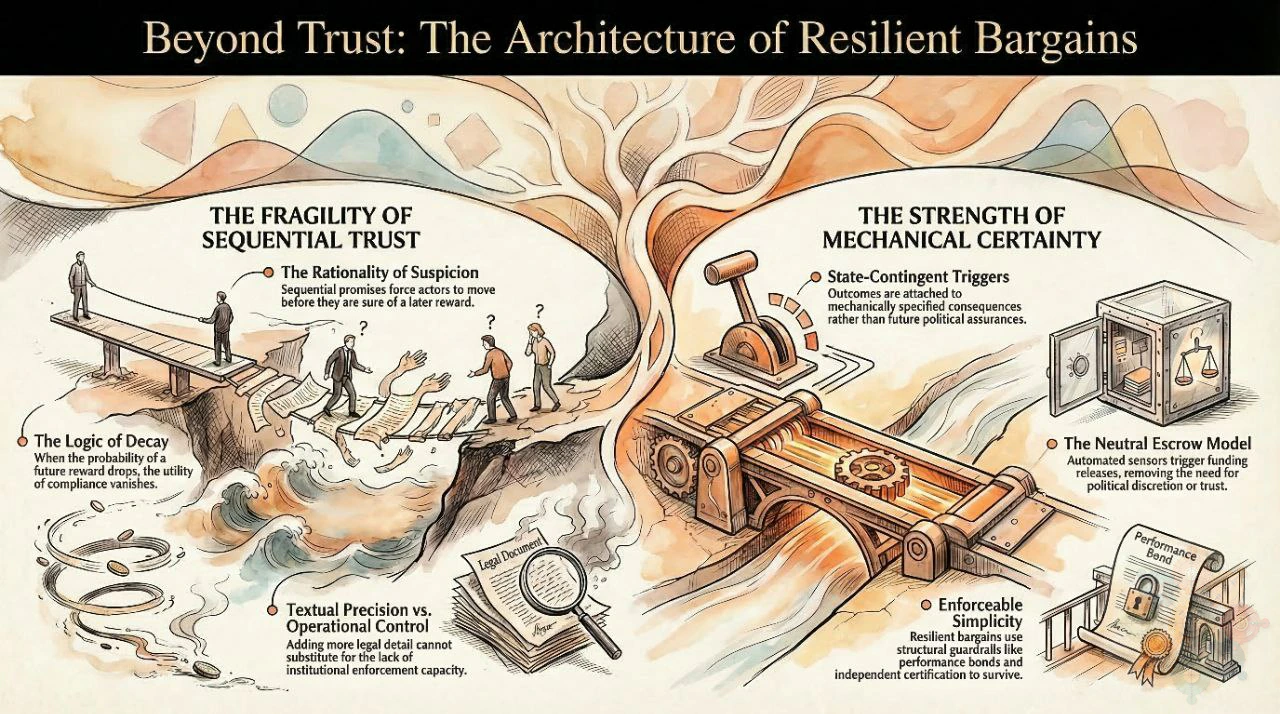
That failure captures a broader habit in development policy and international bargaining. Faced with weak institutions, policymakers reach for more detailed agreements. They add contingencies, refine triggers, draft more remedies and try to anticipate each possible disruption in text. The instinct feels rational because it treats uncertainty as something that can be tamed by description. The complete-contract instinct mistakes textual precision for operational control. It assumes that once the contingencies are drafted, the underlying uncertainty becomes manageable.
Seen this way, the Agreed Framework was not primarily a morality tale about deceit or bad faith. It was a design failure. The agreement asked both sides to rely on sequential promises inside a zero-trust setting, which meant each side had to move before it could be sure the other side’s later obligation would materialize. That is the core vulnerability. A linear bargain can survive disagreement when trust is thick or enforcement is strong, but it becomes fragile when both are absent. The issue was not that the parties lacked virtue. The issue was that the agreement made suspicion rational and compliance insecure.
The Mathematics of the Broken Promise
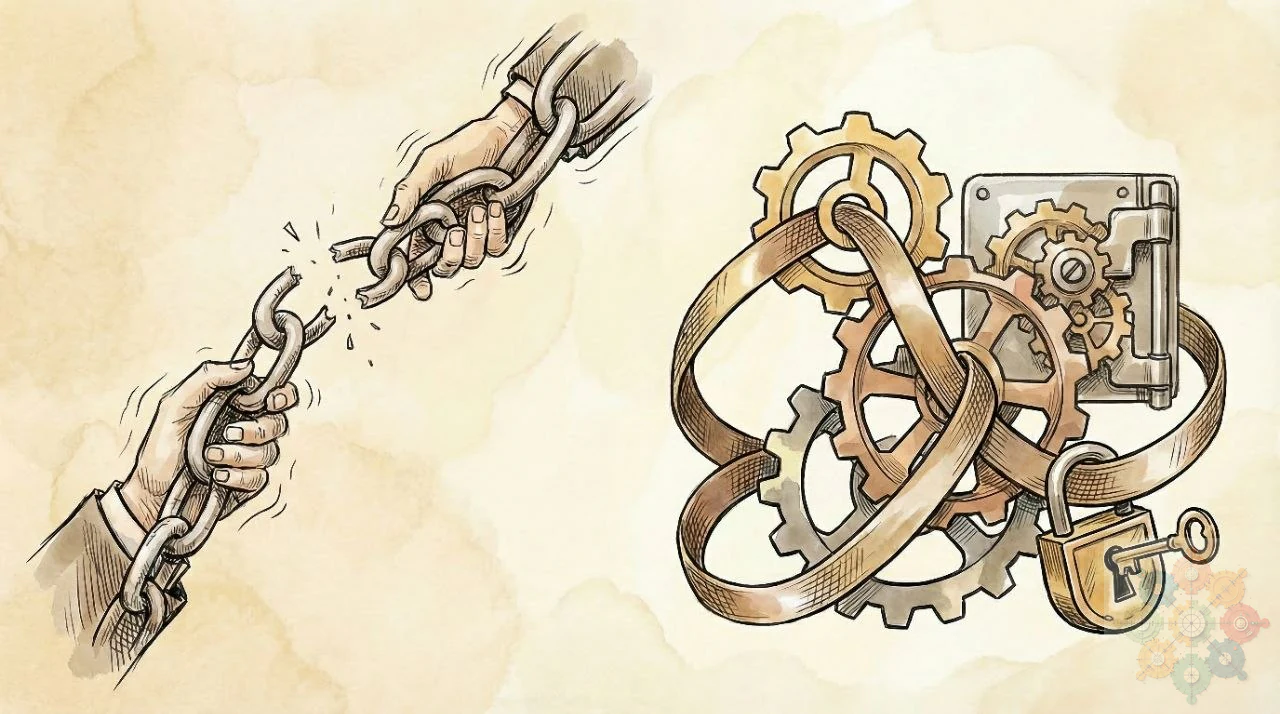
The treaty’s weakness becomes clearer when it is translated into decision terms. Any agreement of this kind holds only if the expected utility of compliance remains greater than the expected utility of defection over the relevant future states of the world:
Where captures actor i’s assessed probability that state s will materialize, and is the payoff to that actor if it does. Stripped of the diplomatic language, this is the entire burden of the agreement. It was a wager on whether future rewards would still look credible after passing through domestic politics, verification disputes and time. Once those probabilities become unstable, the bargain stops behaving like a solution and starts behaving like a gamble.
From North Korea’s perspective, the costs of compliance were immediate and concrete: freeze the plutonium pathway now, accept monitoring pressure now and absorb the strategic vulnerability now. The reward, by contrast, sat years into the future and depended on whether the United States would actually deliver reactors and fuel through a political system North Korea did not control. The relevant probability was therefore not abstract. It was a judgment about congressional appropriations, domestic political turnover and the durability of American commitment. Washington faced a parallel problem from the other side. It had to assess whether North Korea would remain transparent and compliant long enough for future concessions to make sense. In a zero-trust environment, both sides had reason to drive down their estimate of the other side’s future compliance.
That is why the paranoia was rational. If P(s) for the reward state falls toward zero, the expected utility of compliance falls with it. Once that happens, the treaty does more than merely permit defection. It makes early hedging rational. Congressional delay becomes a defensible response to future North Korean cheating, while secret uranium enrichment becomes a defensible response to the risk of future American nonperformance. The agreement did not fail by mistrust entering from outside. It failed because mistrust was already embedded in the design. A bargain built on fragile expectations eventually converts suspicion into strategy.
The Architecture of Pessimism
The mistake is to think that hostile parties need a shared vision of the future before they can sign a stable accord. In fact, their disagreement can be the very basis of design. If the United States is convinced North Korea will cheat, and North Korea is convinced the United States will default, both sides should prefer an arrangement that attaches outcomes to mechanically specified consequences rather than to future assurances. That is what a state-contingent contract does. In Arrow-Debreu terms, the payoff is triggered by a verifiable state of the world, not by a hopeful narrative about future restraint. Trust becomes less important because performance is no longer mediated by political discretion at the moment of vulnerability.
A redesigned nuclear accord would therefore rely on neutral escrow and automated verification rather than staggered trust. Imagine a coalition placing $5 billion at the outset into a neutral sovereign escrow arrangement. If IAEA sensors show enrichment below 3 percent, $100 million is released every month without further political approval. If the sensors detect 4 percent enrichment, the funds freeze immediately. If inspectors are denied physical access for 48 hours, the escrow terminates and the capital returns to the contributing coalition. That design changes the incentives at the point of greatest vulnerability. Washington cannot turn payment into a domestic political bargaining chip because the disbursement rule operates mechanically, and Pyongyang does not need to infer the probability of reward from hostile intent because the reward follows directly from verifiable conduct. The parties are no longer being asked to trust one another. Both sides need only trust the rule.
Conclusion: Building Robust Bargains
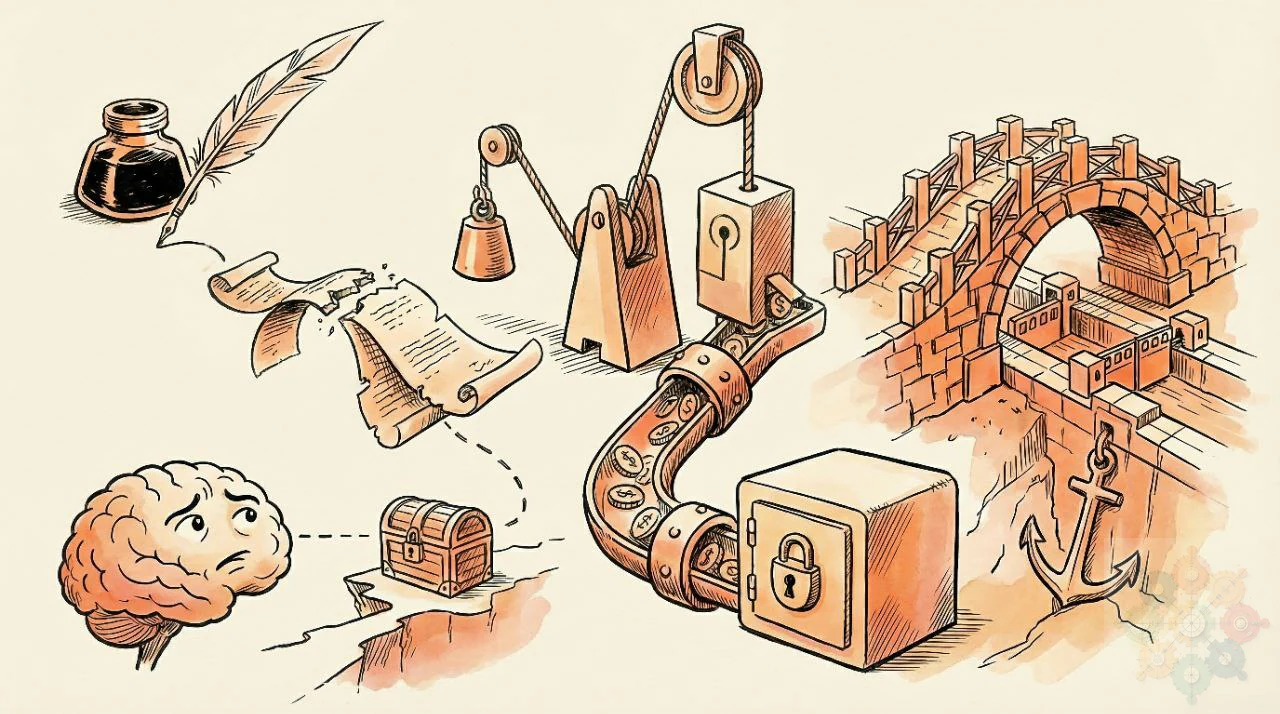
The underlying error in the 1994 Framework was therefore not lack of legal detail. It was the belief that text could substitute for institutional capacity. In fragile environments, the key question is usually a narrower one: what can be observed, verified and enforced without reopening the whole bargain when pressure arrives? That is the case for enforceable simplicity. In infrastructure and energy deals, especially in developing states, one side is often locked in long before the project is finished, while the surrounding environment is shaped by donor pressure, fiscal fragility, exchange-rate volatility and outside political scrutiny. Under those conditions, better design means less reliance on elegant drafting and more reliance on structural guardrails such as milestone payments, escrow, performance bonds, step-in rights, independent certification, staged delivery and explicit renegotiation protocols. Those tools matter because they reduce dependence on heroic adjudication and shift control toward cash flow, timing and possession. In legal terms, verification acts as friction, and that friction is often what preserves legitimacy.
The same mechanism appears in other domains. Climate diplomacy struggles in part because it relies heavily on voluntary sequential commitments whose enforcement remains politically weak and temporally distant. A more robust design would use state-contingent sovereign bonds tied to verified atmospheric telemetry, allowing fiscal consequences to follow measurable environmental states rather than diplomatic reassurance. Aid and reparations face a related problem when large transfers are sent into weak oversight environments and then treated as proof of commitment. A better design breaks those flows into staged delivery through small milestones tied to independent certification. The broader rule is counterintuitive. An incomplete treaty or contract can produce better governance than an elegant one if it is built to survive contested facts, partial compliance and institutional weakness. The objective of institutional design is not elegance. It is to build a bargain that remains strong enough to survive when trust fails.